Now on Kindle
Five honest status reports.
Five different versions of reality.
A practical shared language that keeps business, technology and data aligned until the work actually lands, with or without AI.
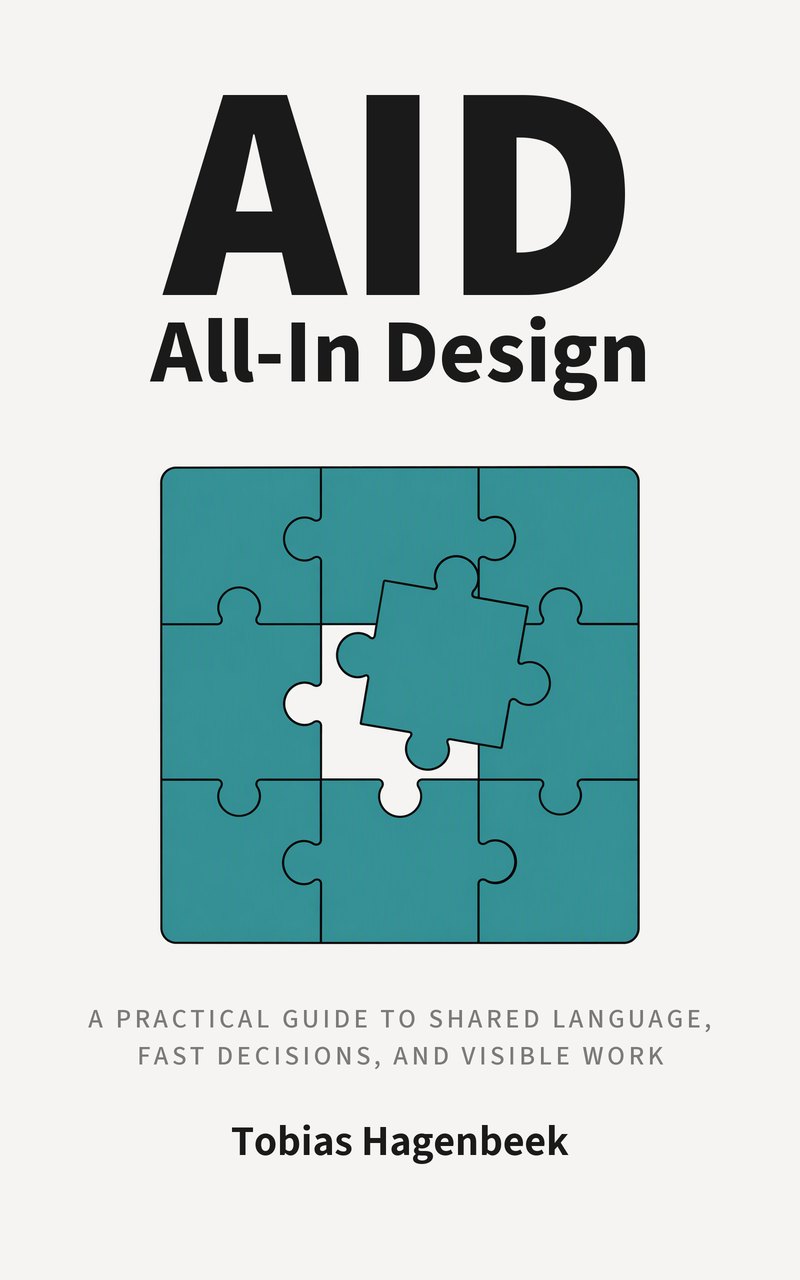
Projects rarely fail for lack of talent. They fail in the gaps between roles.
-
1
A goal becomes five different jobs.
One sentence from a sponsor walks out of the room and turns into five pieces of work that were never laid side by side.
-
2
An answer sits unread for eleven days.
The question was answered. Nobody saw it, and no plan had a line called "waiting."
-
3
"Done" is not the same as landed.
The code is merged and the tests are green. The outcome the work was for has not reached anyone yet.
The system
A deliberately small working system for closing those gaps.
Three artifacts for describing the work. Three loops that keep strategy, delivery, risk and quality connected. Three translators for the hand-offs where meaning is most often lost. And one lens, CLEAR, for comparing work, while the decision stays with people.
AID does not require a new platform, a transformation program, or AI. It works with the teams and tools you already have.
The lens: CLEAR
- CComplexity
- LLeverage
- EEffect
- AAlignment
- RRisk
Scores sort the list. The story decides.
With or without AI.
AID is a language for people. When AI is useful, AID gives it clear context and boundaries, and never hands it a human decision.
Inside the book
One running story, from the first conversation to the outcome.
- 20 chapters in five parts, and five appendices of templates, worksheets and a glossary.
- A playbook you can run next week at the end of every chapter from Part II on.
- Variants by context, down to a company of five.
- More than twenty years on every side of the table, distilled.

Fewer translations, fewer competing versions of reality, and work that does not merely get done, but actually lands.
Get it on Kindle